
How to Get Kansas Court Records
Start most Kansas District Court lookups in Kansas CaseSearch. It is a statewide portal for permitted case information, not the keeper of any county file. Case details online, a linked document, a courthouse terminal, and a certified copy from the clerk are four different things. The county Clerk of the District Court holds the trial-court file. City cases sit with each Municipal Court clerk. Appeals belong to the appellate clerk.
Match the channel to the record. CaseSearch covers District and Appellate cases, and the Kansas Judicial Branch details online records and courthouse-terminal access. County pages list clerk contacts and archive procedures. A phone call answers availability and copy questions quickly. The counter handles walk-in requests. Written requests go by mail or through the statewide KORA form, which offers email, mail, pickup or fax delivery. Pay before you order, per local instructions.
For a county District Court record, follow this sequence:
- Search Kansas CaseSearch for the case and note its case number, county and court level.
- Check whether the needed item is linked online and whether Rule 22 permits remote access.
- Open the Kansas county directory and follow the correct county’s Clerk of the District Court contact and record instructions.
- If the item is not online, ask about public-terminal access, phone assistance, in-person review, or a written request by mail.
- State the exact document and date, and say whether a plain or certified copy is needed. Confirm estimate and payment before fulfillment.
Three Kansas Court Record Layers
A Kansas court record can mean three different layers. One is the case information in a portal. Another is a document actually filed in the case file. The third is a clerk-certified copy, authenticated to match the record. CaseSearch helps you locate the case and its permitted events. A complaint, an order, or a judgment is a separate filed document. Certification adds the custodian's stamp that the copy is true to the original.
- Case information
- Public case details and events displayed through Kansas CaseSearch, subject to electronic-access rules.
- Filed document
- A paper or electronic item maintained in the case file, such as a motion, order or judgment.
- Certified copy
- A copy authenticated by the clerk who holds the file; a screen capture is not certification.
- Transcript
- A record of a hearing prepared through the court reporter or authorized transcription process, not the clerk’s ordinary copy desk.
Pick the layer before you call any office. If a court or agency needs official proof, ask that office directly whether certification or some other authentication is required.
Types of Court Records
A Kansas District Court file can hold a register of actions. It can also hold pleadings, motions, signed orders, journal entries and judgments. Rule 21 of the Kansas Supreme Court calls the register of actions an events index. It lists filings and court events in order. But it is not the complete record. The clerk's file may hold the documents behind each entry, subject to access rules.
Clerks of the District Court keep files for their counties. These cover criminal, civil, family, probate, juvenile and limited-action matters. Some material stays confidential or restricted. Municipal Court clerks hold city-ordinance and city-traffic records. The Kansas Supreme Court and Kansas Court of Appeals keep separate appellate files. Each has its own clerk. A transcript comes from the court reporter. It may also come from an authorized transcription provider, not from an ordinary clerk copy.
Kansas Court Records at Courthouse Terminals
Rule 22 of the Kansas Supreme Court opens another public route: terminals at the courthouse. A terminal can show information the public internet view holds back. It cannot unlock sealed or confidential material. Staff will not release anything a law or court order withholds. Ask the clerk which route fits your case or document.
The Sedgwick County District Court records page is one county example of terminal viewing, written requests and local archive instructions.
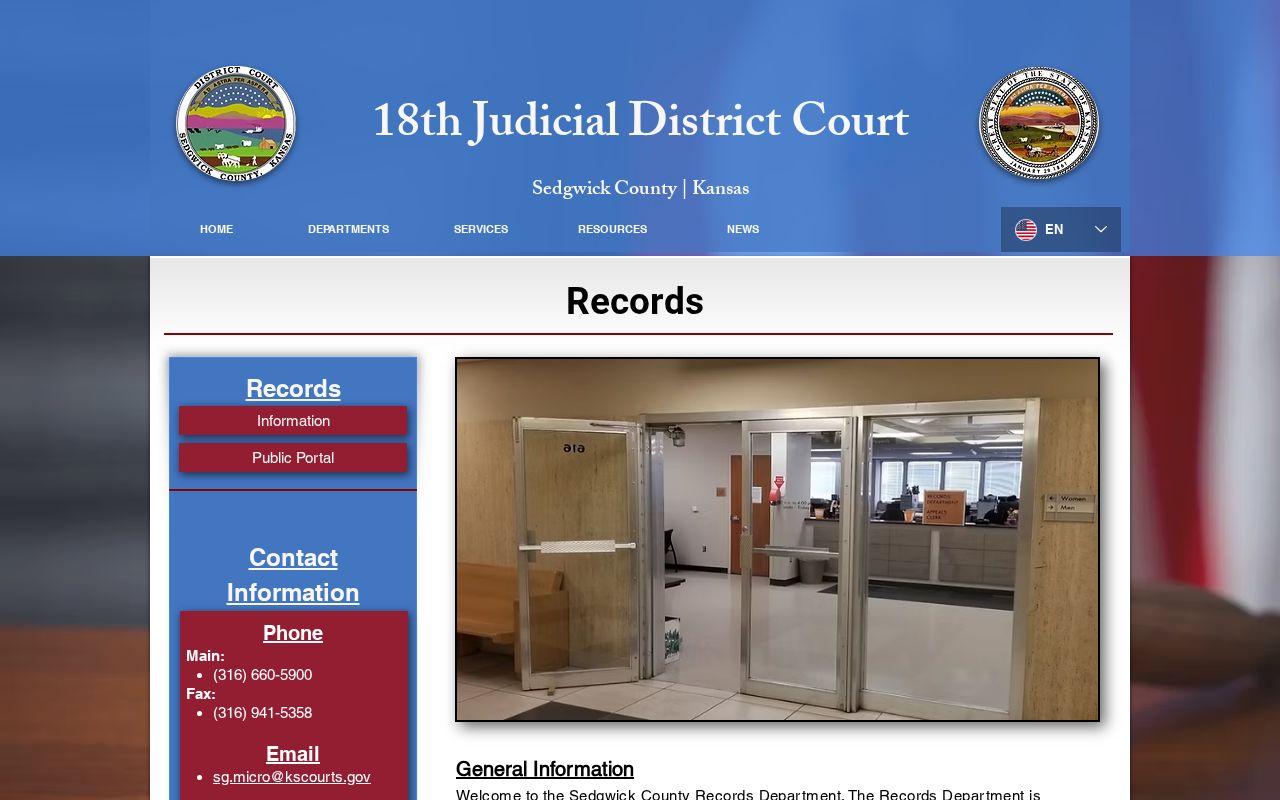
That county page shows how local records staff can fill gaps the statewide search leaves. Older holdings and case-specific copy procedures often live at the county level.
What a Court Record Contains
A Kansas case file pairs an events index with the papers filed behind it. CaseSearch may list the case number, case type, participants, attorneys, assigned judge and hearing dates where law allows. The clerk's file can hold a complaint or petition, an answer, motions, orders, journal entries, a judgment and more. Contents depend on the case and its history.
Use the table to tell these items apart. A public entry does not guarantee every document is viewable online. Kansas Rule 22 and any case-specific order control access. Ask the custodian about a document that is not linked.
| Case number and type | Identifiers used to locate the case file and describe its category; Kansas formats vary by county and date. |
|---|---|
| Participants and attorneys | Names of parties and listed attorneys, when included in public case information. |
| Assigned judge | The judge assigned to the matter, if shown in the public case details. |
| Hearing dates and events | Permitted public settings and the chronological events index, also called the register of actions. |
| Pleadings and motions | Filed requests and responses that may be in the clerk’s file; online document access is limited by rule. |
| Orders and judgments | Written rulings or final decisions. Request the signed document when the entry alone is not enough. |
| Transcript or exhibits | Transcripts follow the reporter’s order process; exhibits or attachments may have separate access limits. |
Kansas KORA Form and Record Custodian
Kansas courts fall under one records law, but many offices hold the files. The Kansas Judicial Branch publishes a KORA request form. It works for a record held by any of them. On it, a requester names the office that has the file. That could be the Kansas Supreme Court. It could also be the Kansas Court of Appeals, a county District Court, or another custodian. The form asks for a description of the existing records and a preferred delivery method. Options include email, mail, in-person pickup and fax. It does not cover everything, though. There is no certified-copy checkbox and no case-number field. There is no fee schedule, no payment method and no completion date.
Routing matters as much as the form itself. Send a county case file request to the county Clerk of the District Court. City-ordinance matters go to the Municipal Court clerk, and appeals go to the appellate clerk. Treat the statewide form as a helper, not a substitute for local clerk procedures. For a case-file copy, list the county and the case number if you know it. Add the document name or date. Say whether you need certification. Transcript requests may get redirected to the court reporter.
Some counties use their own local request form or want a written description. Follow their instructions. KORA covers public records held by covered agencies. It does not convert a custom timeline, a legal answer, or a restricted document into a routine copy request.
Certified Copies and Fees
Some offices want more than a plain printout. Ask the Kansas clerk for a certified copy when an agency or court needs the clerk's authentication that the copy matches the file. A plain copy works fine for reading. An online printout or portal view is not automatically certified. Kansas sets no single statewide copy amount; each custodian publishes its own charges for copies, certification, staff research, delivery and archive retrieval. Confirm the current fee and payment method with the county before you submit.
Local schedules prove the point. Sedgwick's current schedule lists separate rates for printed copies, email requests that require research, certification, and archive retrieval. Reno posts its own copy, certification, and vault-retrieval amounts. Two counties, two price lists. So a statewide page should never promise one price, and a requester should always ask the specific clerk for the number that applies.
| Service | Verified local example | Scope |
|---|---|---|
| Printed copy | Sedgwick: $0.25 per page; Reno: $0.25 per page | County examples, not a statewide schedule. |
| Email copy without research | Sedgwick: no charge on the listed schedule | Research time or other delivery needs may change the total. |
| Email request requiring research | Sedgwick: $20 per hour in quarter-hour increments | Sedgwick lists no document charge for this service. |
| Certification | Sedgwick: $10 per document; Reno: $1 | The price depends on the county schedule. |
| Archived case retrieval | Sedgwick: $30 per case; Reno: $35 per case | Local archive or vault retrieval charges; date ranges vary. |
| First-class mail copies | Sedgwick: $0.50 per page for the first five, then $0.25 | One local delivery schedule; ask the custodian about current postage and payment. |
| Statewide amount | No uniform Kansas copy or certification amount identified | Request a local estimate before authorizing staff time or delivery. |
Kansas Court Copy Fees Differ by County
A county record request may lead to a public terminal, a digital file, microfilm, or a vault where old cases are stored. Each format changes how you ask and what you pay. The Reno County records page outlines its current records and a separate process for items held in the archive vault.
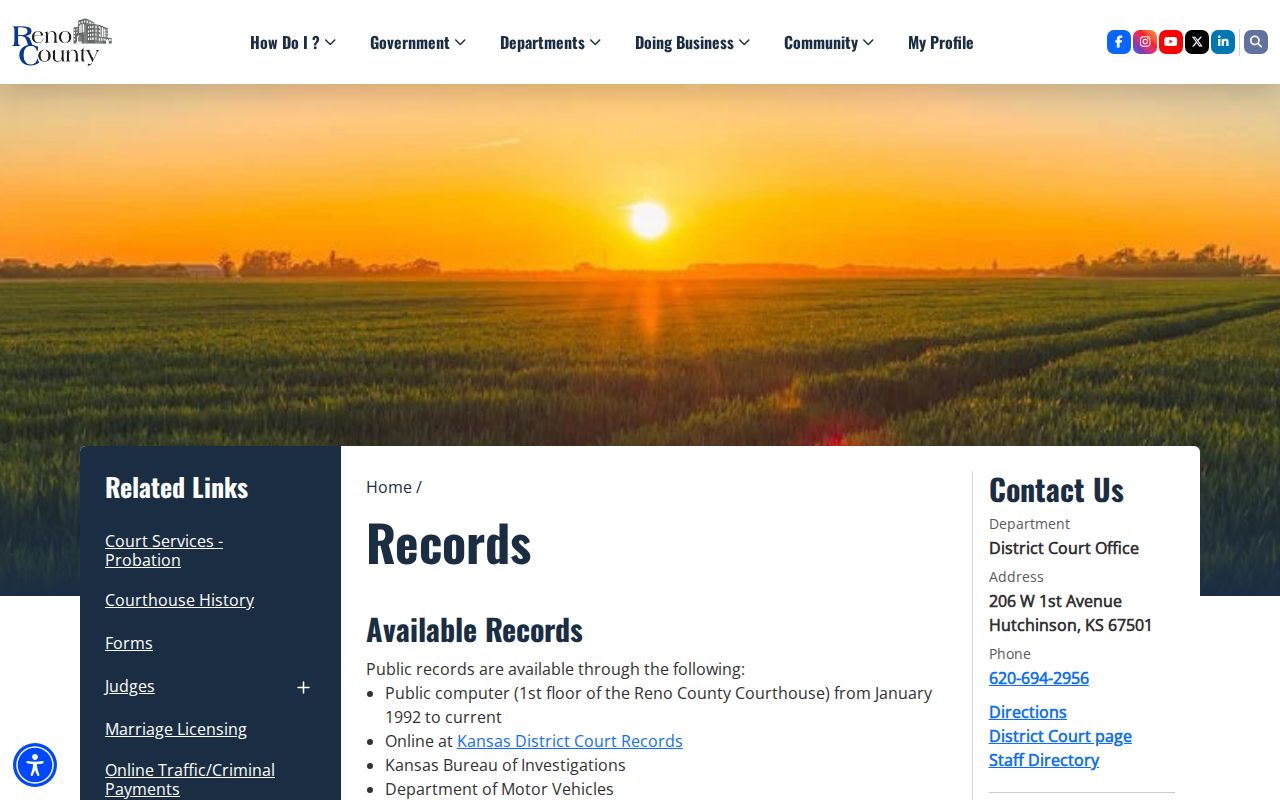
Reno's published figures cover that county's clerk service alone. They show why any Kansas record request should name the exact case. Ask the clerk for a current estimate before you pay.
Sedgwick offers a second local example. Its records department lists electronic and microfilm holdings, takes written requests, and sets separate charges for research and archived retrieval. Neither schedule is a fee rule for the Kansas judicial system. Each county runs its own counter.
Kansas KORA Court Record Three-Day Rule
K.S.A. 45-218 gives the custodian until the end of the third business day after a KORA request to respond. That clock marks a response deadline. It does not promise everything inside three days. Search, review, copying, and delivery can take longer. The reply itself might grant access or seek clarification, provide an estimate, explain a denial, or lay out a completion timetable.
Frame your request around a record that already exists. Do not ask the clerk to reconstruct a case timeline or settle a legal question. Give the clerk a case number, the county, the document name, and an approximate filing date. Those details help the clerk find the item fast. Format, delivery, payment, and any archive retrieval should be raised separately. When part of a file is restricted, ask whether a public portion can be split out. A KORA request cannot override a court seal or a Rule 22 limit.
Public Access and Sealed Records
Kansas Supreme Court Rule 22 governs remote and courthouse-terminal access to public District Court and appellate case records. It draws a line between two kinds of limits. Some case categories are barred from the public portal. Other documents stay restricted even when case details can be found. Certain public material appears on a courthouse terminal. It never appears online. Sealed, confidential, expunged, and other nonpublic records stay closed under law and court order.
The Kansas Open Records Act, K.S.A. 45-215 et seq., sets request and cost rules. It covers public records held by covered agencies. It cannot displace Rule 22 or open a protected court file. A county case file belongs to the county Clerk of the District Court. City ordinance cases and appeals run through separate clerks. Ask which authority and access method fits the specific record you want.
Kansas access rules:
Kansas Supreme Court Rule 22 sets the public electronic and courthouse-terminal access paths for District and appellate case records.
Kansas Supreme Court Rule 21 defines terms used by the public-access rules, including the events index and restricted records.
K.S.A. 45-218 sets the KORA response deadline; it does not guarantee completion within three business days.
K.S.A. 45-219 limits public-record fees to actual costs under the applicable fee policy.
K.S.A. 45-221 lists KORA exceptions and addresses separation of disclosable material.